
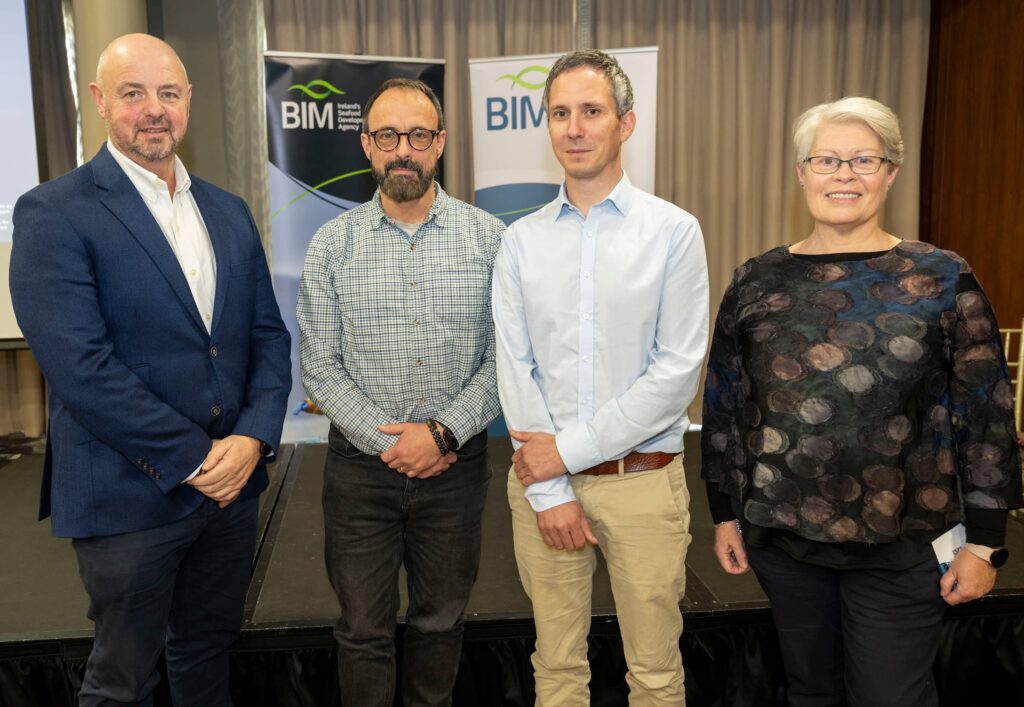
Bord Iascaigh Mhara (BIM) brought together key stakeholders from Ireland’s salmon farming industry for a two-day technical workshop highlighting technical projects instigated under the European Maritime, Fisheries and Aquaculture Fund (EMFAF). The event offered the wider sector an opportunity to review latest research, hear firsthand accounts from farmers trialling new technologies, and explore innovations aimed at boosting sustainability and fish welfare.
Key topics for discussion included results from Bubble Curtain trials, a focus on fish welfare, monitoring and diagnostics data-driven farming and carbon reduction trials.
Opening the first day, BIM’s Seafood Technical Director Rory Campbell led an in-depth session examining the application of bubble curtain systems—walls of rising air bubbles placed around salmon pens to block harmful organisms. Industry representatives Mike Sammon of Clear Seas Aqua and Aisling Doogan of Oceanfarm added operational insights from recent trials.
Originally adapted from offshore wind noise-mitigation systems, the technology has been refined for Ireland’s coastal environment with striking results. According to Geoffrey Robinson, who heads the bubble curtain programme at BIM, controlled trial sites saw survival rates increase by up to 15%, delivering seasonal savings estimated at €2 million.
Each system costs approximately €220,000 to install, but eligible operators will be able to access EMFAF capital grants to support adoption. The long-life equipment requires only periodic maintenance and can be paired with hybrid renewable power solutions, helping farms reduce carbon emissions.
The afternoon session, chaired by Teresa Morrissey of IFA Aquaculture, shifted attention to welfare improvements. Topics included enhanced monitoring tools, nutrition strategies, and diagnostics designed to support healthier, more resilient fish stocks.
Day two, chaired by BIM’s Joanne Gaffney, offered another series of technical insights. The morning featured examples of how remote sensors and early-warning systems are enabling more proactive farm management and delivering gains in fish welfare.
Presenters also detailed progress in the sector’s decarbonisation efforts. Trials with hydrotreated vegetable oil (HVO) fuel and hybrid energy systems have shown promising reductions in fossil-fuel use across both freshwater and marine operations, signalling strong momentum toward lower-carbon aquaculture.
BIM closed the workshop by thanking participants and presenters, noting the strong industry engagement driving advancements in innovation, sustainability and data-led decision-making.